10 Cookbook / Recipe Books, 10 Templates: Your KDP Interior Kit
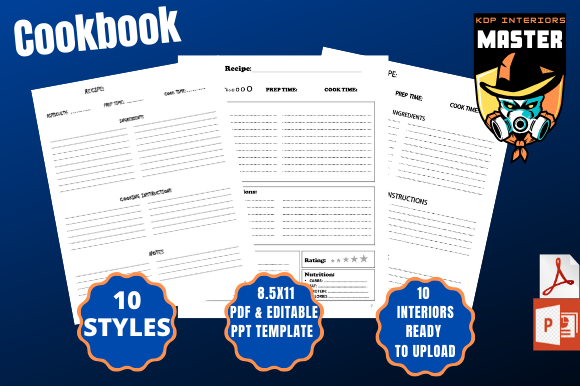
Getting a cookbook onto Amazon KDP involves more than just collecting recipes; it requires a structural backbone that guides the reader through ingredients, instructions, and personal notes. If you are looking to bypass the technical headaches of setting up margins, bleeds, and page styles from scratch, a pre-made interior package is often the most practical route. The "10 Cookbook / Recipe Books, 10 Templates" bundle is designed specifically for this purpose. It offers a 100-page PDF interior and editable PPT templates, providing a standardized yet flexible foundation for your publishing projects. This asset is built for the creator who wants to focus on content curation rather than wrestling with InDesign technicalities.
The Anatomy of a Ready-to-Upload Interior
When we talk about low content book libraries, we usually think of journals or planners, but cookbooks occupy a unique space. They require a specific visual hierarchy to be functional. A reader needs to distinguish between a list of ingredients and the cooking method instantly. The templates included in this pack are professionally designed with an 8.5x11 inch trim size, which is the industry standard for large, easy-to-read instruction manuals. The inclusion of "bleed on" ensures that if you choose to use background textures or full-color photography placeholders, the ink will extend to the edge of the paper without leaving unsightly white borders after trimming.
The package includes 100 page styles across 10 different designs. This variety is crucial for maintaining reader engagement. Flipping through a 100-page book that looks identical on every page can feel monotonous. By utilizing different layout styles—perhaps alternating between a two-column recipe layout and a full-page featured dish layout—you create a rhythm that makes the book easier to digest. This is a key principle of editorial design: varying the pacing to keep the eye interested.
Practicality for Publishers and Entrepreneurs
For the entrepreneur or KDP publisher, the primary value here is the editable PowerPoint (PPT) files. While the ready-to-upload PDF is great for a quick launch, the PPT templates allow for customization that aligns with your specific brand identity. If you are creating a series of cookbooks—for example, a "Summer Grilling" series and a "Winter Soups" series—you can use these templates to maintain consistency across the collection while swapping out visual elements to match the season.
From a brand strategy perspective, consistency builds trust. When a customer buys one of your books and sees a professional layout with clear typography and organized whitespace, they are more likely to purchase the next one. This bundle acts as a design asset that saves you the hundreds of dollars you might spend on a freelance typesetter. It democratizes the publishing process, allowing small business owners to compete with larger publishing houses in terms of interior quality.
Visual Style and Readability
The visual personality of a cookbook interior should be neutral enough to let the food photography (or the recipes themselves) shine, but distinct enough to feel curated. These templates generally favor a clean aesthetic, often utilizing a mix of serif fonts for body text—which aids readability for long paragraphs of instructions—and sans serif fonts for headers, which provide a modern, clean look.
Readability is the most critical factor in recipe book design. If a user is trying to read a recipe while their hands are covered in flour, the text needs to be high-contrast and spaced generously. The 100-page layout takes this into account, offering plenty of white space. This isn't just about aesthetics; it's about usability. A cluttered page leads to mistakes in the kitchen, which leads to bad reviews. Good typography and layout are invisible when done right—they simply facilitate the experience.
Maximizing Your Library and Licensing
Adding these 10 Cookbook / Recipe Books, 10 Templates to your library is an efficient way to scale your output. Instead of spending weeks designing a single book, you can focus your energy on the actual content: testing recipes, writing headnotes, and building your audience. This is the essence of the "low content" model applied to a high-value niche.
When evaluating the fit for your project, consider the specific "personality" of the 10 styles included. Some may feature script-like headers for a home-baked, artisanal feel, suitable for a niche like "Grandma's Favorites." Others might use bold, geometric sans serif typography for a modern, fitness-focused meal prep guide. Understanding the visual language of the templates allows you to match the interior design to the book's subject matter, ensuring that the final product feels cohesive and intentional.
Ultimately, this kit is about removing friction. By providing a PDF interior that is already formatted to KDP specifications and a set of PPT editable templates for customization, it bridges the gap between an idea and a published product. Whether you are a hobbyist documenting family recipes or a marketer building a lead magnet for a food blog, having a reliable structural template allows you to focus on what matters most: the food.